
Treatment
Dental implants
and bone grafting
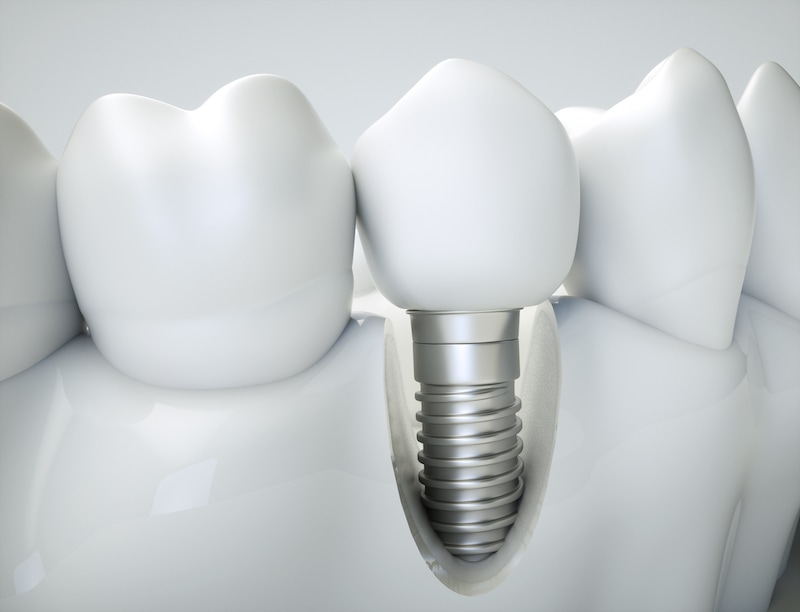
A dental implant is a small biocompatible titanium screw that replaces the root of a missing tooth. Once it has healed and bonded with the jawbone, a custom-made crown is attached on top to restore your smile and chewing function.
- Typical timeline
- 3 to 5 months, or 6 to 9 months if bone grafting is needed
- Anaesthetic
- Local anaesthetic
- Placement appointment
- Usually under 15 minutes for a single implant
- Planning
- Consultation and in-house 3D CBCT scan first
- MediSave
- Surgery is generally claimable; the crown usually is not
- Cost
- Quoted in writing after the scan
Unlike a dental bridge, an implant does not rely on the neighbouring teeth for support, so healthy teeth can be left untouched.
For many people, a well-made implant looks, feels and functions very much like a natural tooth.
When is a dental implant suitable?
Dental implants are commonly used to replace:
- A single missing tooth
- Several missing teeth
- All the teeth in an upper or lower jaw by supporting a fixed bridge or denture
However, an implant is not always the most suitable option.
A dental bridge may be quicker and less expensive, but it requires the teeth beside the gap to be trimmed down.
A removable denture avoids surgery and may be a better choice for people who prefer not to have an implant.
In some situations, especially if a very back tooth is missing and it does not affect your bite or chewing, replacing the tooth may not be necessary.
During your consultation, we will explain all suitable treatment options so you can make an informed decision.
Who may not be suitable for an implant?
Dental implants may not be recommended if you have:
- Untreated gum disease
- Not enough bone to support an implant without bone grafting
- Poorly controlled diabetes
- Heavy smoking habits
- Certain medications used to treat osteoporosis or cancer
- Previous radiotherapy to the head or jaw
- Growing jaws (children and teenagers)
These do not always mean treatment is impossible, but they may affect healing or increase the risk of complications. We will discuss your medical history carefully before planning treatment.
Step by step
What does the
treatment involve?
Five stages, most of which are waiting rather than appointments. Nothing is placed until we have seen the bone it would go into.
-
01
Consultation and 3D CBCT scan
Your treatment begins with a consultation and a 3D CBCT scan. This allows us to assess the amount of bone available, identify important structures such as nerves and the sinus, and plan the safest position for your implant.
The scan also allows us to provide an accurate treatment plan and quotation.
-
02
Bone grafting or sinus lift, if required
If there is not enough bone to support an implant, we may recommend a bone graft or sinus lift.
In some cases, this can be performed at the same appointment as the implant. In others, the graft needs time to heal before the implant can be placed.
-
03
Implant placement
The implant is placed into the jawbone under local anaesthetic. Most single implant procedures take less than 15 minutes.
The procedure is usually comfortable, and most patients are surprised by how straightforward it is.
-
04
Healing
Over the next few months, the jawbone gradually bonds with the implant in a process called osseointegration.
This healing stage is the most important part of treatment because it provides a strong foundation for the final tooth.
If the missing tooth is in a visible area, we can often provide a temporary replacement while the implant heals.
-
05
Final crown
Once healing is complete, we take a digital scan or impression to fabricate your custom-made crown.
The crown is designed to match the colour, shape and size of your surrounding teeth for a natural appearance.
For most patients, the entire treatment takes around 3 to 5 months. If bone grafting is needed, treatment may take 6 to 9 months.
Bone grafting and sinus lifts
After a tooth is removed, the surrounding jawbone naturally shrinks over time because it is no longer supporting a tooth.
If too much bone has been lost, there may not be enough support for a dental implant.
A bone graft rebuilds the missing bone, making implant treatment possible in many cases.
For missing upper back teeth, the maxillary sinus often sits very close to the jawbone. A sinus lift gently raises the floor of the sinus and places bone graft material underneath to create enough space for an implant.
These are common procedures and are often recommended to improve the long-term success of implant treatment.
What are the risks?
Dental implants have an excellent long-term success rate, but no surgical procedure is completely risk-free.
Possible complications include:
- Infection after surgery
- The implant not bonding successfully with the bone
- Temporary or, rarely, permanent numbness if a nearby nerve is affected
- Sinus complications for upper back implants
- Gum and bone infection around the implant (peri-implantitis)
- Loosening or chipping of the crown over time
Smoking, untreated gum disease, poorly controlled diabetes and heavy teeth grinding all increase the risk of implant problems.
To minimise these risks, we carefully plan every case using a 3D scan, treat any existing gum disease before implant surgery, use sterile surgical techniques and monitor your healing closely.
Recovery
Most patients experience mild swelling and soreness for a few days after surgery, with discomfort usually peaking around the second day.
Eating soft foods for the first week and following the cleaning instructions we provide will help your recovery.
Please contact us if you experience heavy bleeding, increasing pain after the third day, or develop a fever.
Looking after your implant
Dental implants should be cared for just like natural teeth.
Brush twice a day, clean between your teeth daily and attend regular dental check-ups.
Good oral hygiene and regular professional maintenance are what keep an implant healthy for many years.
What do dental implants cost?
The cost of treatment depends on several factors, and most of them are decisions about your mouth rather than about the clinic:
- The number of implants required
- The implant system used
- Whether bone grafting or a sinus lift is needed
- The type of crown placed on the implant
Because every patient is different, we recommend a consultation and 3D CBCT scan first. We will then provide a detailed written quotation so you know exactly what your treatment involves before making a decision.
Ask us for a written quote
We would rather quote you accurately than guess. Prices for this treatment depend on your own case, so ask us for a written quote — we will give you one before anything starts, and there is no charge for asking.
You can also look at our cost guide for the treatments where our pricing is settled.
The clinic
Why choose
WE Dental?
-
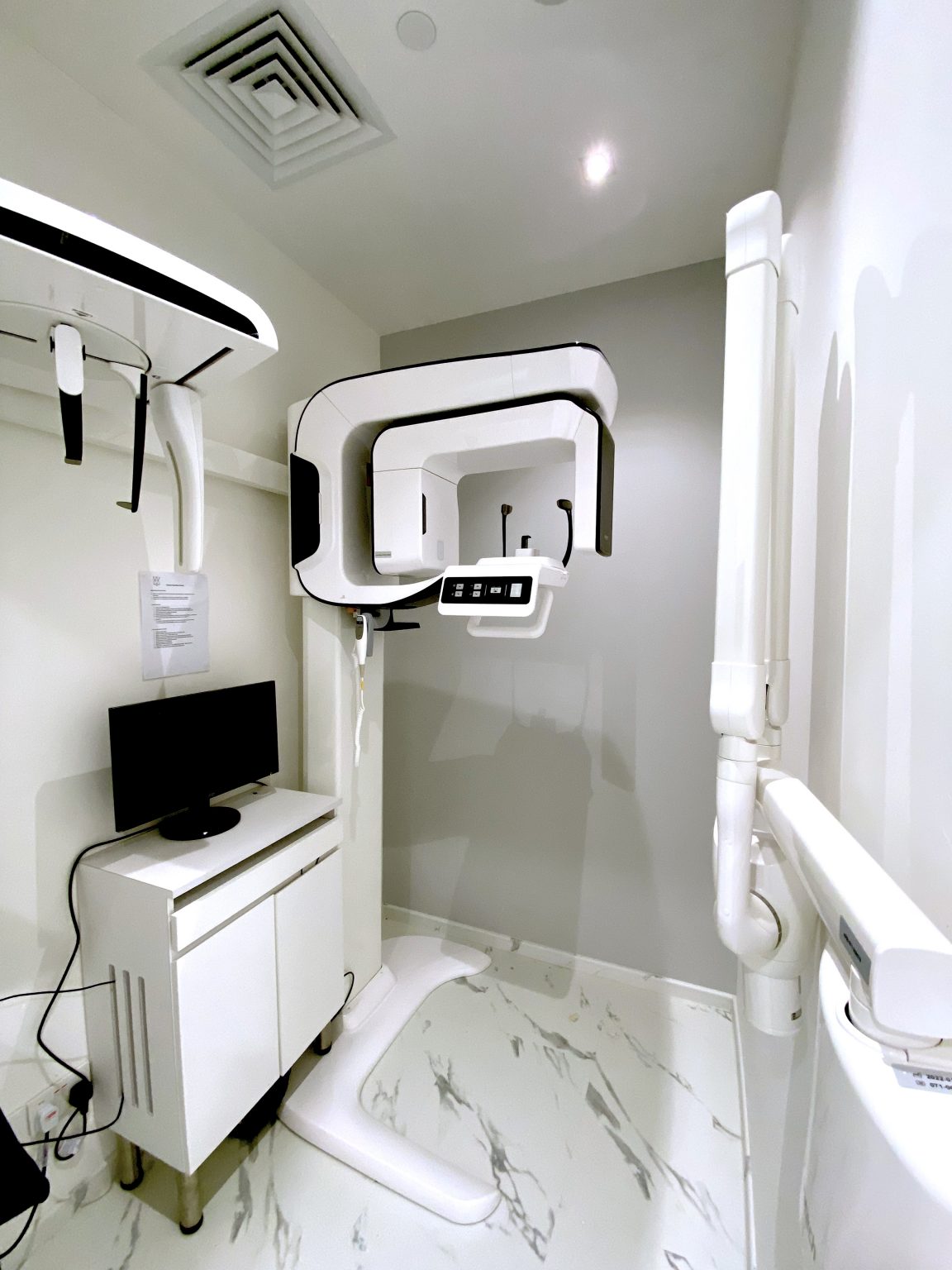
In-house 3D CBCT imaging
We use it to assess your jawbone and plan implant treatment accurately and safely. The scanner is in the clinic, so the planning and the surgery are not separated by a referral.
-
A digital 3D intraoral scanner
Once your implant has healed, it captures a highly accurate digital impression for the design and fabrication of your crown. That improves precision and removes the need for traditional impression materials in most cases.
-
The same dentist throughout
From consultation and surgery to the placement of your final crown and the follow-up reviews, so you receive consistent, personalised care at every stage.
Questions
What people ask
before booking
Does getting a dental implant hurt?
The procedure is carried out under local anaesthetic, so you should feel light pressure rather than pain. Most patients experience only mild soreness afterwards, which is usually well controlled with standard pain medication. Tell us at the consultation if you are anxious — we have ways of making the injection itself easier.
How long does the whole process take?
For most patients, treatment takes around 3 to 5 months. If bone grafting or a sinus lift is required, treatment may take 6 to 9 months.
Can I use MediSave?
Implant surgery is generally claimable under MediSave, subject to Ministry of Health withdrawal limits and eligibility. The implant crown is usually not claimable. We will explain your expected MediSave claim before treatment begins.
What if I do not have enough bone?
This is a common situation. Bone grafting or a sinus lift can often rebuild enough bone to support a dental implant. Your 3D scan will help us determine the most suitable treatment.
How long do dental implants last?
With good oral hygiene and regular dental reviews, many dental implants last 10 to 20 years or longer. Looking after your implant is what does most to extend its lifespan.
Should I choose an implant or a bridge?
An implant replaces the missing tooth without affecting the neighbouring teeth. A bridge is usually quicker and less expensive but requires the teeth beside the gap to be prepared. During your consultation, we will explain the advantages and disadvantages of both options and help you choose the treatment that best suits your needs.
If you want more background first
This page is general information about a treatment we offer. It is not advice about your own case, and it is not consent — we go through the treatment, the alternatives and the risks with you at the clinic before anything begins.
No commitment
Find out whether an
implant is realistic
for your case
A consultation and a scan will tell you what your options are, what treatment would involve and what it would cost, in writing. You are free to leave it there.