
Treatment
Teeth whitening in Singapore
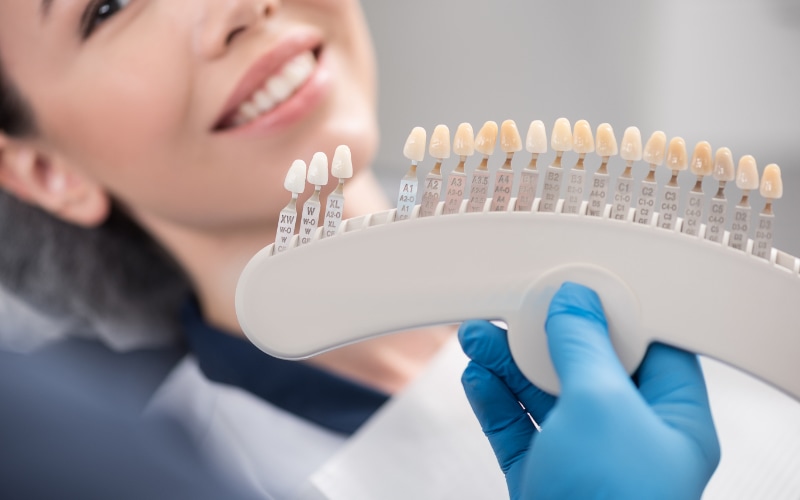
Professional whitening lifts the colour of your natural teeth using a gel a dentist applies and supervises here at the clinic, in a single appointment.
Why teeth go darker
Two completely different things are called staining, and they behave nothing alike. Which one you have decides whether whitening is the right treatment or a waste of your money.
Surface staining comes from what passes over your teeth. Coffee, tea, red wine, curry and other strongly coloured foods, plus smoking, leave colour on the outside of the enamel and in the film of plaque and tartar over it. This responds well to whitening. Some of it is not really a whitening problem at all — a proper scale and polish removes the tartar and the stain sitting on it, and a fair number of people who come in asking about whitening are happier than they expected after a cleaning alone.
Internal staining sits inside the tooth, and no amount of polishing touches it. Enamel thins with age and lets more of the yellower dentine underneath show through. Some antibiotics taken in childhood leave grey or banded discolouration. Too much fluoride while the teeth were forming leaves white or brown flecks. Internal staining does lighten, but less predictably, and heavy tetracycline banding in particular may never fully even out.
One case is worth separating from the rest. If a single tooth has gone dark, especially one that took a knock at some point, that is usually not staining at all — it often means the nerve inside the tooth has died. Whitening the outside will not fix it. That tooth needs looking at properly, and treating it is a different procedure altogether.
What happens at the appointment
We use the Philips Zoom! in-surgery system, and the whole thing is done in one visit.
- An examination first. We check for decay, gum disease, cracks, worn areas and exposed root surfaces near the gum line. This is not a formality — it changes whether we whiten at all, and when.
- A scale and polish, if you are having one. Whitening gel works on a clean tooth surface, so removing tartar and surface stain first gives a more even result.
- Protecting everything that is not a tooth. Your lips and cheeks are held clear and a barrier is placed along the gum line. Whitening gel on gum tissue stings and blanches it, so this step gets proper care.
- The gel, in timed cycles. It goes on the front surfaces of the teeth that show when you smile and is activated by the Zoom! lamp. There are several cycles with the gel refreshed in between, and we check in with you at each one.
- A final look, and a talk through the next two days.
Set aside around an hour and a half. You will feel the occasional cold twinge during the cycles; that is normal and it stops.
When whitening is not the answer
This is the part most whitening pages leave out, and it is the part that decides whether you will be pleased in a fortnight.
Decay and gum disease get treated first, and not just for tidiness. Whitening gel that finds its way into a cavity, a crack or a leaking filling reaches the nerve of the tooth, and that can be properly painful rather than merely uncomfortable — occasionally enough that the tooth then needs treating. On inflamed gum it stings and blanches the tissue. Neither is worth risking for a cosmetic result, so if the examination turns something up, we deal with that first and whiten afterwards.
Crowns, veneers, bridges and white fillings do not change colour. They were made to match the shade your teeth were on the day they were fitted. Whiten the natural teeth around them and they stay put, which can leave a front crown looking darker than it did before. Matching it again means remaking it, and that is a separate treatment with its own cost. Anyone with visible restorations needs to know this before booking, not after.
Not during pregnancy or breastfeeding, and not for children — whitening is for adults with fully developed permanent teeth.
Tell us if your teeth are already sensitive, if you have receding gums with exposed root surfaces, or if you grind your teeth and the biting edges are worn. None of these rule whitening out on their own, but they change how we approach it.
And a general one: if you are hoping whitening will correct the shape or position of your teeth, it will not. It only changes colour. Reshaping is what veneers, gum contouring or orthodontics are for.
What professional whitening does that a kit does not
Most people arrive having already tried something. Whitening toothpastes are mild abrasives — they scrub surface stain and do nothing to the colour of the tooth itself. Pharmacy strips and kits use a much lower concentration of the active ingredient, so they work more slowly, and how much difference they make varies a good deal from person to person.
The real difference is not the strength of the gel, though. It is that in Singapore, whitening at the concentrations that meaningfully change tooth colour is a dental procedure, carried out by or under a dentist. That is what you are buying: an examination before anything starts, someone deciding whether whitening suits your case at all, your gums properly protected, and a clinician answerable for the result.
Lower-strength products sold over a counter work more slowly and change less. Which of those is right for you is your call, and we are happy to talk it through.
Afterwards, and making it last
The first 24 to 48 hours matter most. Freshly whitened enamel picks up colour more easily than usual, so for two days steer clear of coffee, tea, red wine, curry, soy sauce, beetroot, berries and anything else that would stain a white shirt. If you smoke, this is the window where it undoes the most.
Some cold sensitivity over the first day or two is normal and settles by itself. A sensitive-teeth toothpaste helps. If it is still bothering you after a few days, call us.
After that, it is ordinary maintenance: brush and floss properly, keep up with your check-ups and cleanings, and accept that the things that stained your teeth will gradually stain them again. How long it lasts depends far more on your diet and habits than on the treatment, so we would rather not put a number of months on it.
What it costs
Ask us for the figure and you will have it before you book. It is a single appointment, and adding a scale and polish beforehand costs more — we will quote both together so there is nothing to discover at the counter.
Whitening is not claimable under MediSave. MediSave covers specific procedures on the Ministry of Health's list, and cosmetic treatments are not among them.
Why have it done here
You are examined before anything begins, by a dentist who will tell you if whitening is not going to give you what you want. If the examination turns up a cavity, a failing filling or gum inflammation, we can treat that here too rather than sending you elsewhere and starting again. And if whitening is going to leave an existing front crown looking out of place, you will hear that before you have paid for it, not after.
We are at Bukit Timah Plaza, and one appointment covers it.
Questions
What people ask
before booking
How much does teeth whitening cost in Singapore?
Ask us and you will have the figure before you book. It is one appointment rather than a course, and adding a scale and polish beforehand costs more. Whitening is not claimable under MediSave — MediSave covers listed medical and surgical procedures, and whitening is a cosmetic one.
Does teeth whitening hurt?
It should not hurt, but it is not sensation-free either. Most people feel occasional short twinges of cold sensitivity during the appointment and for a day or two afterwards, and that settles on its own. Tell us if it becomes uncomfortable during the treatment — we can adjust as we go rather than pressing on.
How long do the results last?
That depends far more on you than on us. Coffee, tea, red wine, curry and smoking are what stained the teeth in the first place, and they will do it again. Some people are happy for a couple of years, others notice a difference within months. Cutting back on the worst offenders is the single thing that makes it last.
Will whitening work on my crowns, veneers or fillings?
No. Whitening only lifts the colour of natural tooth enamel. Crowns, veneers, bridges and white fillings keep exactly the shade they were made in. If you have any of those on a front tooth, whitening the teeth around them can leave them looking dark by comparison, and matching them again means replacing them. Please raise this with us before you book rather than after.
Is whitening bad for my enamel?
Used properly on sound enamel, whitening does not soften or thin your teeth. Where care is needed is when the enamel is not intact — over a cavity, a crack, a leaking filling or an exposed root surface near the gum — and finding those is exactly what the examination beforehand is for. Some sensitivity in the first day or two is common and usually settles by itself. Tell us if your teeth were already sensitive before you started, or if it has not settled after a few days.
Can I have whitening while pregnant or breastfeeding?
We do not whiten teeth during pregnancy or while breastfeeding. It is an elective cosmetic treatment with no reason to hurry, so we would rather wait. A scale and polish is fine in the meantime and often makes more difference than people expect.
Related treatment
Reviewed by Dr Wong Chi Him Benedict, 14 October 2026.
This page is general information about a treatment we offer. It is not advice about your own case, and it is not consent — we go through the treatment, the alternatives and the risks with you at the clinic before anything begins.
No commitment
Ask what your
treatment would
involve
A consultation will tell you what your options are, what treatment would involve and what it would cost, in writing. You are free to leave it there.