
Treatment
Wisdom tooth surgery in Singapore
We will not pretend otherwise — wisdom teeth can be a nuisance. Plenty cause no trouble at all and are best left alone. This page is about telling the difference, and about what happens when one does have to come out.
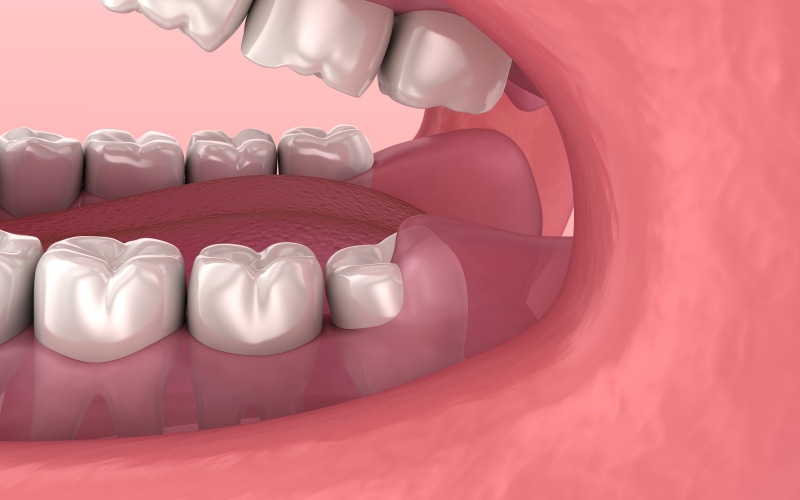
Wisdom teeth arrive last, usually between the late teens and mid-twenties, and often into a jaw that has no room left for them. Sometimes they come through cleanly and cause no trouble for the rest of your life. Sometimes they get stuck halfway, or grow sideways into the tooth in front, and then they cause a lot of trouble.
The important thing to know first is that an impacted wisdom tooth is not automatically a wisdom tooth that has to come out.
Signs your wisdom teeth need attention
- Partial eruption — the tooth breaks through the gum but never fully arrives, leaving a flap of gum over it that traps food and bacteria.
- A swollen, sore or infected gum at the back of the jaw, sometimes with a bad taste or difficulty opening your mouth.
- Pain at the back of the jaw, which may come and go over months.
- Difficulty cleaning the area, because a toothbrush cannot properly reach a tooth that is half-covered or tilted.
- Decay in the wisdom tooth or in its neighbour. This is the one that changes the argument, because damage to the second molar in front is much more consequential than damage to the wisdom tooth itself.
- Repeated infections, each one settling with treatment and then coming back.
When leaving it alone is reasonable
If a wisdom tooth is fully buried in bone, causing no symptoms, not decayed, and not damaging the tooth in front, keeping an eye on it is a perfectly respectable plan. Surgery has risks of its own, and there is no benefit in taking out a tooth that is not doing any harm. We will tell you when that is our view, and we will keep it under review at your check-ups rather than forgetting about it.
Surgical removal versus simple extraction
This distinction drives both the price and whether MediSave applies, so it is worth being clear about.
Simple extraction is for a wisdom tooth that has come through normally and can be gripped and removed with instruments. No cut in the gum, no stitches.
Surgical removal is for a tooth that is impacted or only partly erupted. The gum over it is opened, a little bone may be removed, and the tooth is often divided into pieces so it can come out through a smaller opening. The gum is then closed with stitches. It sounds worse than it feels; sectioning the tooth is what makes the procedure gentler, not harsher.
Most wisdom teeth that need removing need the surgical version. For straightforward removal of other teeth, see tooth extraction.
What happens if an infected wisdom tooth is left
A partly erupted wisdom tooth with an inflamed gum flap over it — pericoronitis, if you want the word — tends to settle with cleaning and sometimes antibiotics, and then come back. Each episode is a few days of soreness and difficulty eating.
The reason we do not simply keep treating the episodes is what happens in between. Food and bacteria trapped under that flap sit against the back of the second molar in front, which is a perfectly good tooth doing real work. Decay there is awkward to reach, awkward to fill, and in some cases means losing a tooth that had nothing wrong with it in the first place. A cyst can also form around a buried tooth over years, quietly, which is one of the reasons we keep an eye on impacted teeth we have decided not to remove.
Very occasionally an infection at the back of the lower jaw spreads into the tissues of the floor of the mouth or the neck. That is uncommon, it is a genuine emergency, and it is the reason for the box further down this page.
What happens on the day
- Examination and imaging. An X-ray or CBCT scan shows the shape of the roots and, for lower teeth, how close they sit to the nerve that supplies your lip and chin. This is what we plan around.
- Local anaesthetic. The area is numbed thoroughly. We also have computer-controlled delivery if the injection is the part you dread.
- The removal. You will feel firm pressure and hear some noise — that is normal and it is not the same as pain. If anything sharp gets through, tell us straight away and we will top up. A hot, infected tooth is the classic case where anaesthetic needs a second go, and there is nothing wrong with asking.
- Stitches, usually the dissolving kind, and gauze to bite on.
- Instructions, in writing, plus a number to call.
A single straightforward tooth takes around twenty minutes to half an hour. A difficult one takes longer, and we would rather take longer than rush.
What can go wrong
Most removals are uneventful. These are the things worth knowing before the day rather than after.
- Nerve injury. The nerve supplying your lower lip, chin and tongue runs close to the roots of some lower wisdom teeth. Removing one can bruise it or, less often, damage it, leaving numbness, tingling or altered taste on that side. It usually settles over weeks or months, and occasionally it does not. Scanning beforehand is how we see where that nerve actually runs, and it is the main thing that reduces the risk — it does not remove it. If your scan shows roots sitting where we would rather they did not, you will hear that before the day.
- Dry socket, covered below.
- Infection in the healing socket, usually in the first week.
- Bruising and jaw stiffness, common and temporary.
- Damage to a neighbouring tooth or filling, uncommon.
- A small piece of root left behind where removing it would risk more than leaving it. We would tell you and keep it under review.
Recovery
This is what people actually want to know.
The first day. Bite on the gauze for the first half hour or so. Some oozing for the rest of the day is normal. Do not rinse, spit vigorously, use a straw or smoke — all of these can dislodge the clot that is doing the healing. Eat soft, cool food once the numbness has worn off.
Days two and three. Swelling usually peaks here, and so does stiffness in the jaw. An ice pack against the cheek helps in the first 24 hours. Start gentle warm salt-water rinses from day two, after meals.
The rest of the first week. Swelling and soreness ease steadily. Bruising on the cheek or jaw is common and looks worse than it is. Keep the area clean, brush the other teeth normally, and go carefully around the socket.
When to call us: bleeding that will not settle with pressure, pain that increases after day three instead of easing, a fever, or swelling that spreads towards your eye or your throat. The last of those is urgent — see the box below.
Painkillers: take what we prescribe or recommend, exactly as directed. If you are buying something yourself, ask the pharmacist for something suitable after an extraction — a few of the ordinary ones make bleeding worse.
If a doctor has put you on a blood-thinning medicine, keep taking it exactly as you were told. Do not stop it for a dental appointment unless the doctor who prescribed it tells you to. Tell us you are on it and we will plan around it, which is far safer than you stopping it.
Tell us about every medicine you take, not only the ones that seem dental. Anything for osteoporosis or for cancer matters too — tablets or injections, current or in the past — along with any radiotherapy to the head or neck. Those change how the jaw heals once a tooth is out, and we would far rather plan around them than find out afterwards.
What it costs, and MediSave
From our cost guide:
| Treatment | One tooth | Two teeth |
|---|---|---|
| Surgical removal | $1,250 | $2,150 |
| Non-surgical extraction | $260 | $440 |
Non-surgical extraction is priced as an $80 base fee plus $180 per tooth. These are the prices for wisdom teeth specifically; removal of other teeth is quoted separately.
An X-ray is needed before we can be accurate, because a tooth that looks simple can have roots that make it anything but.
On MediSave: surgical removal is a listed procedure and a claim is generally possible; non-surgical extraction is not claimable. We are not going to tell you what you will be left paying, because that depends on your account balance and on the Ministry of Health's withdrawal limits, and it applies to Singapore Citizens and Permanent Residents only. We will work out your actual figure and put it in writing before you agree to anything.
Why have it done here
We scan before we operate, so nobody is guessing about where the nerve runs. We have computer-controlled anaesthesia for people who find injections the hardest part. And because we do the whole thing here — assessment, scan, surgery and review — there is no being referred out mid-way and starting the explanation again.
If you are in pain right now, call rather than message, and we will fit you in as soon as we can.
Questions
What people ask
before booking
Does wisdom tooth removal hurt?
During the procedure you should feel pressure and movement rather than sharp pain, because the area is properly numbed. Anaesthetic occasionally does not take fully first time, especially around a tooth that is already infected — tell us the moment you feel anything sharp and we will stop and top it up. Afterwards, expect soreness and swelling for a few days.
Can I claim MediSave, and how much?
Surgical removal of a wisdom tooth is a listed procedure, so a claim is generally possible. Non-surgical extraction is not claimable. Claims apply to Singapore Citizens and Permanent Residents, are drawn from your own or an approved family member's account, and are capped by the Ministry of Health's withdrawal limits. A claim also depends on the treatment being carried out at a MediSave-accredited clinic — ask us to confirm ours before you count on it. We will confirm the actual claimable amount for your case in writing before treatment rather than quoting you a figure here.
How many days of MC will I need?
Most people take one to two days for a straightforward removal, and rather more if all four come out at once or the tooth was difficult. Swelling usually peaks on the second or third day, not the first, so plan for the day after tomorrow rather than tomorrow. If your work is physical or you cannot easily take breaks, tell us and we will be realistic with you.
Do all four have to come out at once?
No. Some people prefer to get it over with in one sitting; others would rather do one side at a time so they can still chew comfortably. Doing one side at a time means more appointments but an easier week each time. There is no clinical rule — we will talk through what suits your schedule and how difficult the teeth are.
What is dry socket and how do I avoid it?
Dry socket is when the blood clot in the healing socket is lost early, leaving bone exposed. The sign is pain that gets worse around day three to five rather than better, often with a bad taste. It is treatable, and we will fit you in as soon as we can. We are closed on Sundays, public holidays and evenings, so if you cannot reach us and the pain is severe, go to a clinic that is open rather than waiting it out. To avoid it, leave the socket alone for the first 24 hours — no vigorous rinsing, no spitting, nothing through a straw. Smoking is the separate one, and the biggest single thing that brings dry socket on. Leave it for at least the first few days rather than the first day, and longer if you can.
Can I have a wisdom tooth out while pregnant?
We would usually rather wait, and treat any infection in the meantime, because elective surgery and X-rays are best avoided during pregnancy. If a tooth is acutely infected then treating it may well be safer than leaving it, and the second trimester is generally the most suitable window. Tell us you are pregnant, or might be, at the first appointment.
Related treatment
Reviewed by Dr Wong Chi Him Benedict, 14 October 2026.
This page is general information about a treatment we offer. It is not advice about your own case, and it is not consent — we go through the treatment, the alternatives and the risks with you at the clinic before anything begins.
No commitment
Ask what your
treatment would
involve
A consultation will tell you what your options are, what treatment would involve and what it would cost, in writing. You are free to leave it there.